
Marion County Arrest Records and Charges
Arrest records in Marion County usually begin with the sheriff or another law enforcement agency. They may concern the person arrested, arresting agency, booking event, warrant, or jail custody status. The official county sheriff page says the sheriff serves criminal warrants, subpoenas, and civil processes, transports inmates, maintains courthouse security, operates the detention center, and maintains sex offender registry duties. No official Marion County mugshot or booking database was found in the researched sources.
Court charges after arrest are filed and tracked through the court case. The Chattahoochee Judicial Circuit District Attorney prosecutes Superior Court criminal cases for Marion County and the rest of the circuit. Once charges are filed, the clerk's criminal court record may show charge text, count, docket activity, plea, disposition, sentence, costs, and later appeal activity. Custody status belongs with jail verification, while final case outcome belongs with the full Marion County criminal court records file.
The official Marion County sheriff page is the local source for sheriff duties tied to warrants, jail operations, inmate transport, and court security.

Those sheriff duties explain why an arrest or warrant question may start with law enforcement even when the filed charge later appears in court records.
Verify Marion County Arrest Records
Because no official online jail roster or arrest blotter was found for Marion County, verification depends on the type of fact being checked. Current custody and booking questions should go to the sheriff or jail. Filed charges and case status should go to the Superior Court clerk or the Georgia court e-access route if the case is available through a participating provider. A statewide prison search is useful only after a person is in Georgia Department of Corrections custody, not for a new county jail booking.
- Call the Marion County Jail or sheriff for current custody and booking confirmation.
- Ask whether a warrant, citation, or filed charge has been sent to a court.
- Check the clerk or account-based court access path for charge lines and docket status.
- Read each charge with its disposition because charges can be amended, reduced, or dismissed.
- Use GDC only for sentenced state offenders or state custody, not as a county jail roster.
The sheriff and jail can confirm custody facts that a court docket may not show. The court record can confirm filed charges and court status that a booking record may not update. When a person needs the full docket, disposition, or sentence, the case file rather than the arrest record should control.
Charging Documents After Arrest
Georgia criminal cases can move into court through more than one charging path. Marion County research identifies the District Attorney as the prosecutor for Superior Court criminal cases in the Chattahoochee Judicial Circuit. Magistrate judges may also consider arrest and search warrant requests. The charge record should be read as the formal court accusation, not as proof that a person was convicted.
| Document | Who Uses It | What It Starts or Supports |
|---|---|---|
| Complaint or warrant application | Law enforcement, a prosecutor, or a private applicant in a Magistrate process | Early criminal process, warrant review, or accusation support. |
| Accusation or information | Prosecutor | A filed charge in court, often used to state the offense and count. |
| Indictment | Grand jury and prosecutor | A formal felony charge path in Superior Court. |
One arrest can lead to several charge counts. A later court record may show that some counts were dropped while others continued. It may also show that an original charge was reduced to a less serious offense as part of a plea.
The GDC Marion County Jail location page confirms the local jail address and phone but does not publish a Marion County online arrest roster.
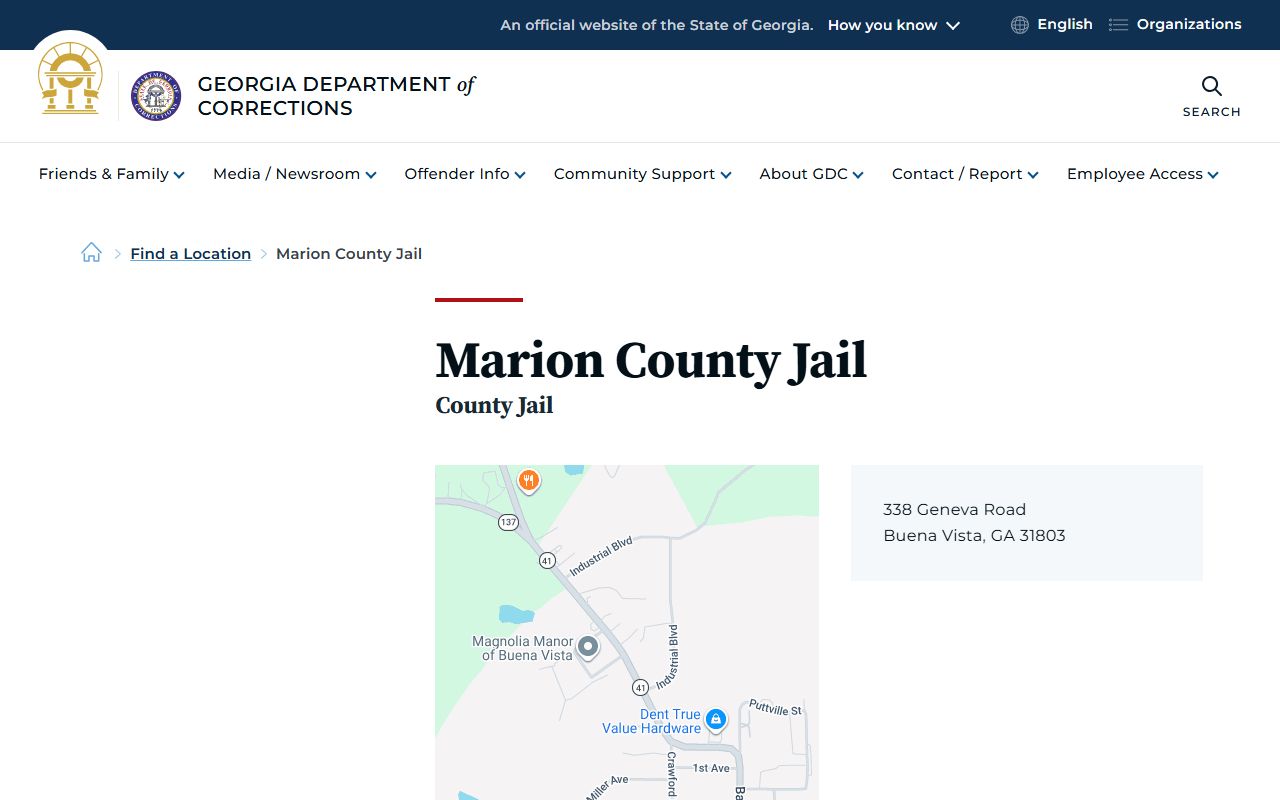
That gap matters because custody checks should be verified directly rather than inferred from a court charge entry.
Marion County Charge Status
Charge status is the part of the court record that tells what happened to each count. It should be read after the charge text, not before it. A charge can appear as pending while hearings continue, then later show an amended count, dismissed count, plea, guilty finding, not guilty finding, or sentencing entry. The research did not identify a public Marion County sample charge screen, so the table uses the court-record terms supplied in the research file.
| Status | Meaning in a Court Charge Record |
|---|---|
| Pending | The charge has not reached final disposition in the record being reviewed. |
| Amended or reduced | The charge text, severity, or count changed after filing. |
| Dismissed | The court record shows the count or case ended without conviction on that charge. |
| Nolle prosequi | The prosecutor declined to continue the charge, subject to the specific court entry. |
| Guilty or convicted | The record shows a plea or verdict that resulted in conviction. |
| Acquitted or not guilty | The record shows the defendant was not convicted after trial or court ruling. |
Disposition means the outcome of a case or charge. Sentence means the punishment or conditions imposed after conviction. Those two fields should not be merged when reading Marion County court charges after arrest.
Charges vs Convictions
An arrest record can exist without a conviction. A charge can exist without a conviction. A Marion County court charge should be treated as an accusation until the disposition says otherwise. This distinction is vital for job, housing, licensing, and personal record checks, because public search results may show old charge text even when the final outcome was dismissal, reduction, or acquittal.
| Question | Charge | Conviction |
|---|---|---|
| What is it? | A formal accusation in the court record. | A final outcome based on plea or verdict. |
| Where does it appear? | Charging document, docket, warrant, accusation, or indictment. | Disposition, judgment, sentence, or final order. |
| Can it change? | Yes. It may be amended, reduced, dropped, or dismissed. | It can be appealed, modified, restricted, or corrected by court action. |
For background screening, public court pages are not a substitute for a lawful consumer report. The legal notice in the footer applies to use of information for credit, employment, tenant, insurance, and other FCRA-regulated decisions.
State Charge and Custody Sources
The Georgia Find an Offender service page explains that GDC offender search can use name, ID or case number, age, and other identifying information. It also points county jail users back to the county. That distinction is important for Marion County arrest records because GDC is a sentenced offender and state custody source, not an official Marion County booking feed.
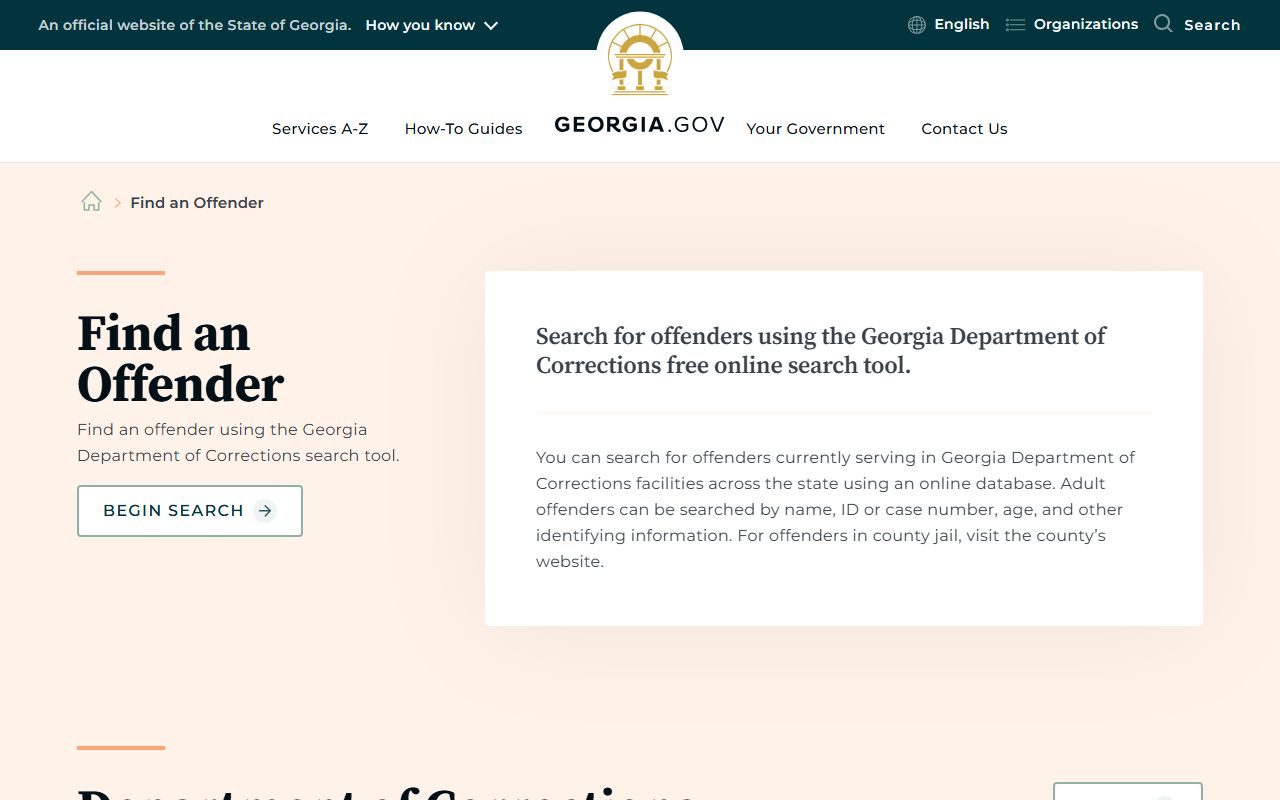
The state offender source is best used after a court sentence or transfer, while new charges and local custody still require court and sheriff verification.
The GBI sex offender registry is a separate statutory registry, not a general arrest-record or charge-record database. The sheriff's page says local registry duties include maintaining registry information and quarterly verifications, but a registry listing should not be treated as a current warrant list or court charge list.
Restricted Marion County Charge Records
Georgia law and court rules can limit public access to charge records. Juvenile matters are not ordinary public criminal records. Adoption records, some family violence material, sealed court files, active investigation material, personal identifiers, and safety-sensitive information may be withheld or redacted. Georgia's record restriction process under O.C.G.A. 35-3-37 may limit public access to eligible criminal history, but the research did not find Marion-specific forms, fees, or local filing instructions.
- Sealed court record
- The court file or document is hidden from ordinary public access by law or order, though courts, parties, agencies, or persons allowed by the order may still have access.
- Restricted criminal history
- Eligible criminal history is limited from public view under Georgia record restriction rules, but law enforcement and criminal justice agencies may retain access in many cases.
- Local verification
- Ask the clerk which order controls a sealed file, and ask the clerk, prosecutor, or counsel which Georgia process applies to a restricted disposition.
Several Marion County charge record categories deserve a direct access check before a person relies on a public search result.
- Juvenile charge: access is usually limited by juvenile confidentiality rules, so ask whether a court order is required.
- Sealed case: the public docket or document may be hidden, so confirm with the clerk that no public copy is available.
- Restricted criminal history: public access may be limited after eligible disposition, so check process with the clerk, prosecutor, or counsel.
- Active warrant or investigation: release may be withheld for safety or enforcement reasons, so call the sheriff or issuing court.
Note: No official Marion County sheriff or police mobile app was found, so no app-only arrest, charge, or warrant feature should be assumed.